Tag Archives: Heaven

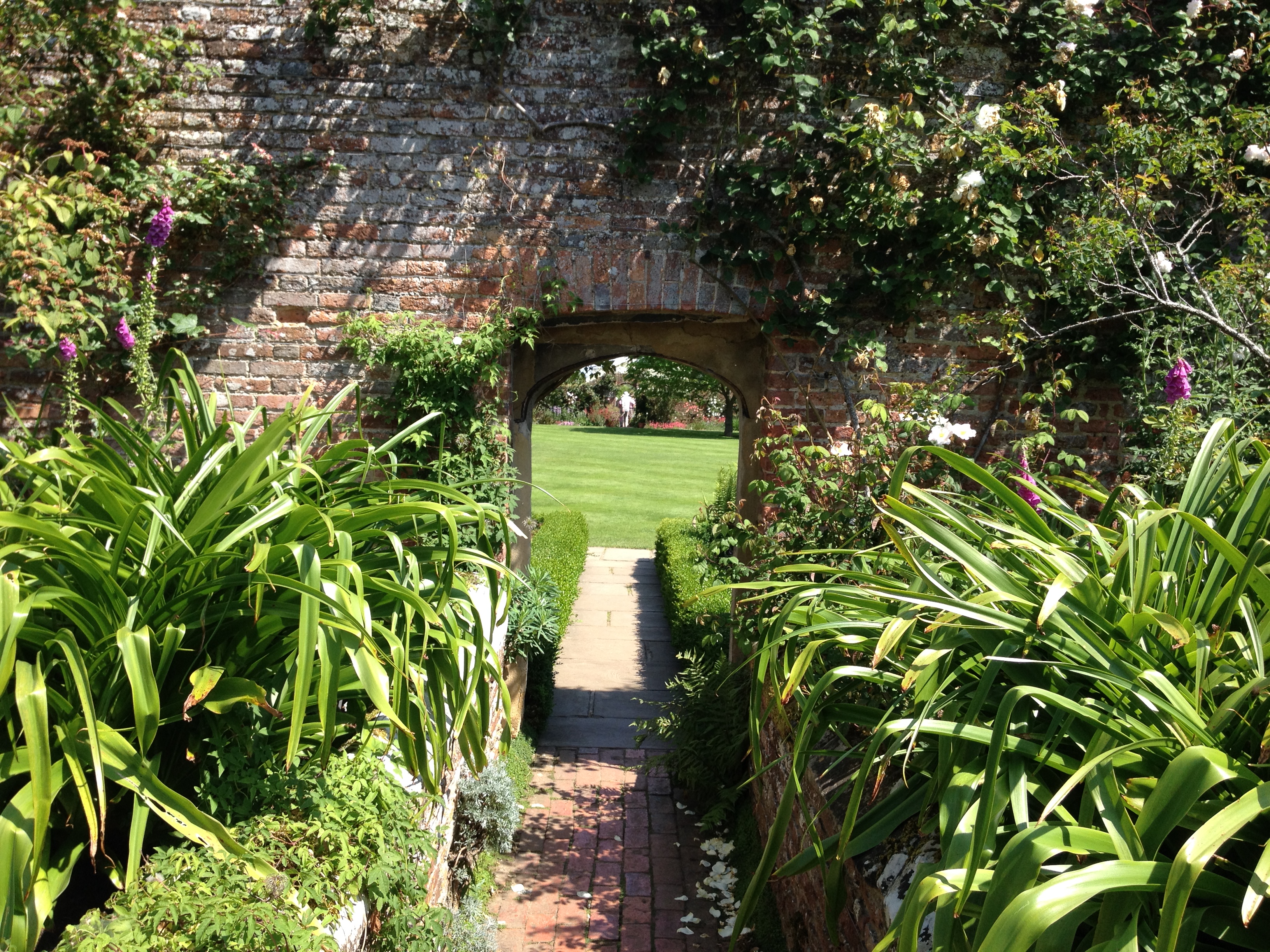
Garden door

 “I see what you’ve done. Now see what I’ve done. I’ve opened a door before you that no one can slam shut. You don’t have much strength, I know that; you used what you had to keep my Word. You didn’t deny me when times were rough.

 “And watch as I take those who call themselves true believers but are nothing of the kind, pretenders whose true membership is in the club of Satan—watch as I strip off their pretensions and they’re forced to acknowledge it’s you that I’ve loved.

 “Because you kept my Word in passionate patience, I’ll keep you safe in the time of testing that will be here soon, and all over the earth, every man, woman, and child put to the test.

 “I’m on my way; I’ll be there soon. Keep a tight grip on what you have so no one distracts you and steals your crown.

Revelation 3: 8-11

When we are children we often have comforting images we return to again and again. In my case one of these images was a door in a wall. Through this door was a garden and if I could only find it then I could go through this door and enter the garden where nothing bad could happen. Of course, as I grew up this image became tinged with sadness. In the godless world I lived in then, this door could never exist.

Before I started the book club I spoke to a number of (adult) people about their favourite books. This book, The Last Battle, by C. S. Lewis came up again and again. Having read it again, I wonder if it is that image of a door into a perfect world that means so much to so many people. Yet it is a world full of paradoxes. The first is that you must step into the darkness to find the light. Lewis describes the moment Tirian (the Narnian King) steps over the threshold into the stable. He expects to find a dark place inhabited by Tash, the dark god. Instead:

For a moment or two Tirian did not know where he was or even who he was. Then he steadied himself, blinked and looked around. It was not dark inside the Stable, as he had expected. He was in strong light: that was why he was blinking.

In the bright world Tash is there. But he only wants to overcome the Calormene leader, who has summoned him. Soon, Tirian sees another sight.

Seven Kings and Queens stood before him, all with crowns on their heads and all in glittering clothes, but the Kings wore fine mail as well and had their swords drawn in their hands.

These people are the humans who have made their way into Narnia from our own world. But there is one missing…

The rest of the book is really an allegory or fable. Is it of Heaven? Is it of a New Earth, renewed in the image of Heaven? I don’t know and I’m not sure it really matters. Maybe we could go one step further and say it is a picture of the Kingdom of God here, now, on Earth, in our own lives and hearts.

SusanpevensieBut, Tirian asks: ‘Where is Queen Susan?’

“My sister Susan,” answered Peter shortly and gravely, “is no longer a friend of Narnia.”

“Yes,” said Eustace, “and whenever you’ve tried to get her to come and talk about Narnia or do anything about Narnia, she says ‘What wonderful memories you have! Fancy your still thinking about all those funny games we used to play when we were children.'”

“Oh, Susan!” said Jill. “She’s interested in nothing nowadays except nylons and lipstick and invitations. She always was a jolly sight too keen on being grown up.”

So Susan is excluded from the New Narnia. And what is her terrible crime? She is the sceptic, the one who embraces the ‘real’ world. She has forgotten the wonder of the walk through the snowy forest and the awe of meeting Aslan. The everyday god of social acceptance has become more important. What she no longer believes in she cannot have.

But the next thing the Narnians find is that some people have arrived the New Narnia who don’t believe in Aslan. They find the dwarves sitting in a circle, unable to see the beautiful land and only seeing the dark and smelly stable. Even Aslan cannot help them. He gives them fine food and it tastes like raw turnips. Fine wine tastes like smelly water;

But very soon every Dwarf began suspecting that every other dwarf had found something nicer than he had, and they started grabbing and snatching, and went to quarrelling, till in a few minutes there was a free fight and all the good food was smeared on their faces and clothes or trodden under foot.

But when at last they sat down to nurse their black eyes and their bleeding noses, they all said: “Well, at any rate there’s no Humbug here. We haven’t let anyone take us in. The Dwarfs are for the Dwarfs.”

“You see,” said Aslan. “They will not let us help them. They have chosen cunning instead of belief. Their prison is in their own minds, yet they are in that prison; and so afraid of being taken in that they cannot be taken out. But come, children. I have other work to do.”

The problem is that the Dwarfs have been taken in. Night after night they had bowed down to a donkey in a lion skin. They had been told this was Aslan and, for a while, had believed it. They had done what this false god had asked them to do. So, when he was shown to be a fraud. They refused to believe in anything except themselves and, perhaps, each other.

In our godless world this is what we call ‘growing up’. In the last ten years or so I’ve met a lot of teenagers. They all believe in something. It may be a boy band or a football team. It could be their own dreams or ambitions. Yet all of these things will fail. The boy band or football team will, after all, be just young men who can falter. Even if the dreams are realised they will not change who we are, or chase the shadows away. So these youngsters will leave behind the gods that failed them, get a job and a mortgage and just well, carry on.

Before we reach the end I want to look at another character in this story. The Last Battle was published in 1956. To modern minds it has some very non-PC characteristics. One of these is that the baddies (called Calormenes) are clearly of middle Eastern origin. They are quite bloodthirsty and have an unpleasant, devil like, god. But Lewis makes the point that, even in such a rotten barrel, there will be one or two good apples. Emeth resolves to walk into the stable to find his god ‘to look apon the face of Tash though he should slay me’. But once he walks through the door he finds himself in the wide, beautiful, New Narnia and comes face to face with Aslan.

“Then I fell at his feet and thought, Surely this is the hour of death, for the Lion (who is worthy of all honour) will know that I have served Tash all my days and not him. Nevertheless, it is better to see the Lion and die than to be Tisroc of the world and live and not to have seen him. But the Glorious One bent down his golden head and touched my forehead with his tongue and said, ‘Son, thou art welcome.’ But I said, ‘Alas Lord, I am no son of thine but the servant of Tash.’ He answered, ‘Child, All the service thou has done to Tash, I account as service done to me.’…

But I also said (for the truth constrained me), ‘Yet I have been seeking Tash all my days.’ ‘Beloved,’ said the Glorious One, ‘Unless thy desire had been for me thou woudst not have sought so long and so truly. For all find what they truly seek.’

So Emeth the Calormene joins all the other humans, talking animals and other creatures as they go ‘further up and further in’. They go through another door into an even wider and more beautiful place. But I won’t tell you how it ends, you will have to read the story yourself.

Three Worlds

Start

When I was reading ‘A New Kind of Christianity’ it occurred to me that we need a new way of thinking about the world. A way that includes God. This sort of bothered me. My ‘light bulb moment’ happened standing in a supermarket queue (I don’t think anyone noticed). It was not a new idea for me, I’d explored it before as a way of thinking about some of the gospel stories but I realised I needed to lay it out as an idea on its own before looking at the implications. I’ve called it ‘Three Worlds’. And here it is.

World 1

Patterns I’m sitting at my desk, looking out the window; its been raining and there are spots of water on the window. These are all real physical things. World one is the physical world we move around in. What we can see, touch, feel, smell and taste. Yet this is not a simple thing. When I look out the window each tree is a different colour and the pattern of leaves is different. And how we experience the physical world is different for each of us. On my pilgrimage last month, I just wanted to look at everything, some people wanted to touch things. Others were concerned with signs and symbols. For many people the overwhelming experience was what was happening inside their body. Blisters, aches and pains, were taking up front space in their minds. Science is discovering more and more about our physical world. I honestly believe that some of these give us a clue to the mind of God. He cares about our physical world. He made it beautiful.

World 2

World 2 is the social world. We need to live in a world connected to others. Loneliness is a terrible thing and can cause illness and even death. We understand this world instinctively as clearly as the physical world we live in.People talking I’m thinking that one of the reasons why social media is so important in our society is that it is an attempt to recreate the village communities that we have lost. It is said that in one day a modern person sees more people in one day than someone living 150 years ago saw in a lifetime. So creating and maintaining communities of people who really care about and for each other is incredibly hard. Yet this is what we long for. The picture here is of some of the people on our pilgrimage after a private church service. We all had something to say, a connection to be made.

We also make connections to animals, places and even objects. One of my friends is always telling me to ‘declutter’. ‘What can you possibly need with all those books?’ she asks. I’m not sure she understands!

World 3

World 3 is God’s world. Jesus called it the ‘Kingdom of Heaven’. We might call it the ‘Spiritual dimension’. In my very first post on this blog I talked about our nine senses. To recap these are:

  1. Sight
  2. Hearing
  3. Taste
  4. Touch
  5. Smell
  6. The sense of the inside of our bodies.
  7. The knowledge of our own thoughts.
  8. The reasoning or judgement on these thoughts.
  9. The sense of the presence of God.

And, just as almost everyone can see, it seems that almost everyone can sense the presence of God. There is even a word for the presence of God in the everyday world – Numinous. I’m going to quote Alister McGrath for a definition of this word:

“numinous” – a mysterious and awe-inspiring quality of certain things or beings, real or imagined, which (C. S) Lewis described as seemingly “lit by a light from beyond the world”.

We sense this in the beauty of the natural world, in art, in the love we feel and receive from other people. For half my adult life I was an atheist but I was still moved by religious music. My heart knew that it was telling me something important and real even if my head didn’t understand it. More than anything else this presence of God in the world shows His generous nature. Everyone has access to his presence in this way even if they don’t believe in him.

From time to time God seems to break in and act in a more direct way. These are not necessarily true miracles, but they are experiences and events that cannot be explained in any other way. The tendency of our secular world is to do exactly that even if it means calling otherwise sane and rational people deluded. But if we accept the reality of God’s world it means that the world we see, feel and talk about makes a whole lot more sense.

Three Worlds together

The idea behind these three worlds is that they create a framework to understand the whole world we live in. What I’m hoping to do is to use this framework to think about all sorts of things. I’m going to go back to the start of my journey with God and look at Chaos Theory (Yes, really) and look at how we can understand some of the Gospel stories better using this framework. I’m not sure where we will end up. It should be interesting.

Suggested Reading.

‘The Book of Sparks’ by Shaun Lambert. The quote is from ‘C. S. Lewis, A life’ by Alister McGrath.

Of the hundreds of books I read as a girl there are only a handful that still sit on my shelves: Lord of the Rings, The Glass Bead Game, some of the Narnia books and this book: Jane Eyre. It is, of course, a love story. Through TV and film adaptations almost everyone knows the story: The young orphan girl who becomes a governess and falls in love with her employer. But I will leave the reader of this blog to discover that for themselves because I want to look at another aspect of this book. Hidden in its 500 or so pages are some extraordinary ideas about heaven and hell.

But first: Why talk about Heaven and Hell? Well, I said in an earlier blog that no-one wants to talk about miracles but everyone wants to talk about what happens after you die. Even people who have no intention of ever stepping foot in a church are thinking about it. (The most bizarre question I had recently was about what happens to battery chickens after they are killed. And no, I don’t know the answer). Charlotte Bronte lays bare a lot of the mythology surrounding this and, I think, gives us a better way to consider this whole question.

The book starts with Jane as a young girl being brought up by her Aunt, who dislikes her. She is introduced to the patron of a school, Mr Brocklehurst, and Aunt Reed gives him some advice:

I should be glad if the superintendent and teachers were requested to keep a strict eye on her, and above all, to guard against her worst fault, a tendency to deceit. I mention this in your hearing, Jane, that you may not attempt to impose on Mr Brocklehurst’

Well might I dread (thinks Jane), well might I dislike Mrs Reed; for it was her nature to wound me cruelly: never was I happy in her presence. However carefully I obeyed, however strenuously I strove to please her, my efforts were still repulsed, and repaid by such sentences as the above. Now uttered before a stranger, the accusation cut me to the heart: I dimly perceived that she was already obliterating hope from the new phase of existence which she destined me to enter. I felt, though I could not have expressed the feeling, that she was sowing aversion and unkindness along my future path: I saw myself transformed.. into an artful noxious child and what could I do to remedy the injury?…

‘Deceit is, indeed a sad fault in a child.’ said Mr Brocklehurst; ‘it is akin to falsehood, and all liars will have their portion in the lake burning with fire and brimstone’

So here is my quick image of the lake of fire. This is really Hell as a threat. If you don’t do what you are supposed to do then this is what will happen to you! I’m not convinced. Something in me says that Hell would not be that obvious.

cartoon hell

But hidden in this passage is another kind of hell, a much more immediate one. I drew the picture below for a study we did about a year ago on the parable of the Sower. The parable is about the word of God. It falls on different sorts of ground, and some falls among weeds and thorns. In Matthew 13 Jesus explains this:

22 “The seed cast in the weeds is the person who hears the kingdom news, but weeds of worry and illusions about getting more and wanting everything under the sun strangle what was heard, and nothing comes of it.

inthorns

Jane, in her childish way, is internally voicing a fear that many of us have: That we will be unable to escape our past, that sins and injustices, real or imagined, will follow us wherever we go. That the small green shoots of a new life, a new start, will be strangled by what we have brought with us from our life before. Recently I said that I did not believe in Hell. ‘What do you mean by Hell?’ I was asked. ‘A sort of cartoon Hell with fire and brimstone’, I answered. But I do believe in the kind of Hell that Jane imagines, a hovering of fear over everything we do.

 And for a while, after she goes to school, this fear seems to be realised but two people come into her life who change her views. The first is a kindly teaHelen Burnscher called Miss Temple. The second is a slightly older girl called Helen Burns.

Helen seems to have an almost supernatural ability to put up with difficulties and forgive those around her. She is constantly accused and punished for the slightest transgressions, yet accepts this without complaint. As Jane gets to know her one thing is clear. Helen is dying. A fever breaks out in the school she attends but Helen is not dying of Typhus, she is dying of consumption and she has known for a long time. In the middle of the night Jane wakes up and feels that she must go and visit Helen. As it is a cold night she gets into bed with her to keep warm. Then they have the following conversation:

“I am very happy, Jane; and when you hear that I am dead, you must be sure and not grieve: there is nothing to grieve about. We all must die one day, and the illness which is removing me is not painful; it is gentle and gradual: my mind is at rest… By dying young, I shall escape great sufferings. I had not qualities or talents to make my way very well in the world: I should have been continually at fault.’

‘But where are you going to, Helen? Can you see? Do you know?’

‘I believe; I have faith: I am going to God.’

‘Where is God? What is God?’

‘My Maker and yours who will never destroy what he has created. I rely implicitly on His power, and confide wholly in His goodness: I count the hours till that eventful one arrives which shall restore me to Him, reveal Him to me.’

‘You are sure, then, Helen, that there is such a place as heaven; and that our souls can get to it when we die?’

‘I am sure that there is a future state; I believe God is good; I can resign my immortal part to Him without any misgiving. God is my father; God is my friend; I love him; I believe he loves me.’

‘And shall I see you again, Helen, when I die?’

‘You will come again to the same region of happiness: be received by the same mighty universal Parent, no doubt, dear Jane.’

There seems little need to comment further. If we trust God then we must trust him to look after us after we die. We do not know, cannot know and, perhaps, should not know exactly what heaven will be like. If I live out an average lifespan then I have about another 25 years on this earth and I don’t feel any need to rush towards my end. After all, with all its difficulties and challenges, God has put me here. I shouldn’t throw it away. But, I’m not afraid of death, or only in the way that we are afraid of anything new that cannot be altered.

Jesus has very little to say about  it. Only when he is nearing his end he says (John Ch 14 – The Message):

‘Don’t let this throw you. You trust God, don’t you? Trust me. There is plenty of room for you in my Father’s home. If that weren’t so, would I have told you that I’m on my way to get a room ready for you? And if I’m on my way to get your room ready. I’ll come back and get you so you can live where I live.’

But I don’t think that God’s home will be like a large hotel with a discreet manager catering for our every whim. He will be more like a generous host, present in everything, reaching out to all his guests. And there lies the problem. Because, what happens if you have spent your whole life sneering at Him, thinking you are better than Him, or doing your very best to ignore His existence? What happens if you are so ashamed of who you are that you have tried to only show your ‘best’ side to him? Jesus tells a few stories about God inviting people to a feast and all the good, respectable people giving their excuses and not turning up. These same good, respectable people who couldn’t bear to be with God while they were alive will suddenly be face to face with him. Its going to be pretty uncomfortable to be living in his home, in his presence every minute of every day.

I’m sure I will return to this theme but, to complete Charlotte Bronte’s vision of Hell and Heaven, we must speed forward in the book to Jane as an adult. She is living with a family of two sisters and a brother. She has discovered that this family are actually her cousins. But rather than settling down to a comfortable life with them she is presented with a dilemma: Should she marry her cousin and go with him to be a missionary in India?

St John Eyre Rivers must be one of the most interesting characters in 19th Century fiction. He is intensely religious but not spiritual. He appears to be more concerned with those on the other side of the world more than the people around him. He wants to do good but is prepared to destroy Jane, both physically and emotionally, in the process. As the daughter of a clergyman Charlotte Bronte must have known people like this. Indeed, to me, this has the ring of truth. There are many people, inside and outside the Church, who feel that the best way to do good in the world is to leave the world they know and enter another. Maybe they are right for themselves but ,like Jane, I feel rather uncertain about this. But I know two things: Anywhere in the world there is good to be done (however outwardly comfortable it seems) and to do good without wanting to, without Joy, is a lifeless and almost cruel thing. He is described thus:

… he seemed of a reserved, an abstracted, and even of a brooding nature. Zealous in his ministerial labours, blameless in his life and habits, he yet did not appear to enjoy that mental serenity, that inward content, which should be the reward of every sincere Christian and practical philanthropist.

For him Heaven can only be reached through Hell. He will be given his ‘reward’ only if he first denies himself every softer human quality. You have to ask yourself what kind of room Jesus will be preparing for him. Maybe a bare monastery cell, if he’s lucky!

There is a lot of nonsense talked about life after death and I hope I’m not going to add to that. But on the other hand there seems no harm in playing around with ideas on this topic, just as long as we don’t think we know anything for certain. But first I have a personal admission to make: I know a lot about computer systems. Not the sort of systems that run the laptop I’m writing this blog on, or the WordPress software that is publishing it out to the net but big corporate database systems. And very strange things they are. For a start they are never switched off. Also, the system the office users see is completely different from the system I see, which consists largely of patterns of data. And there are other people, who look after the low level functioning of the database and servers who see yet another side which is mostly composed of processes which move the data from one place to another. So, like a living thing the whole system is constantly changing and working, even when no-one is using it. Even when it is ‘down’ the core of it is still functioning.

So, why does this matter to our thinking about life and death? Well, because last week we copied this system from one physical computer to another. We took an image of the essence of the system and put it in a file. This image couldn’t do anything, it was essentially dead. We then copied this into a working system which ran exactly like the one we had copied it from, but it was on a different physical computer, in a different building. For the computer system this was quite a traumatic process. It was unable to communicate with the outside world for a couple of days. For a short while it had no data at all.

Metaphors are dangerous things and I don’t want to push this too far but it seems to me that (from the clues in the bible) this copying process is a lot like what happens when we die. Luke Chapter 20 says:

34 Jesus replied, ‘The people of this age marry and are given in marriage. 35 But those who are considered worthy of taking part in the age to come and in the resurrection from the dead will neither marry nor be given in marriage, 36 and they can no longer die; for they are like the angels. They are God’s children, since they are children of the resurrection. 37 But in the account of the burning bush, even Moses showed that the dead rise, for he calls the Lord “the God of Abraham, and the God of Isaac, and the God of Jacob”.[a]38 He is not the God of the dead, but of the living, for to him all are alive.’

So, we will have a new type of body, be ‘like the Angels’. The only account we have of this kind of body is that of Jesus himself. When he came back from the dead he could appear and disappear at will, He was clearly different yet was also ‘himself’. If we are to continue after our own deaths then, however different we are, some essence of ourselves must continue. And just like my computer system that essence can only be transferred at the moment of our death. This means we must be more like Helen Burns than St John Rivers. It is what we are, not what we do that matters, if we are to meet God in his home.  One of my favourite Christian songs is ‘Dance’ by the Newsboys. This seems to put it perfectly:

Faith is the substance
Faith is the key
Faith is gonna take us
Where we’re meant to be

So, if we believe, really believe in God; If we trust, really trust in Jesus then we will be changed by Him. Then what we do will always be right because it will come out of who we are. Then it won’t matter if we get to Heaven because we will already be living in the Kingdom of God.

Postscript

Firstly I want to apologise to anyone who was expecting the next blog to be on ‘Mind and Cosmos’. I will get back to that, but not just yet.

Recommended reading:

If you have never read ‘Jane Eyre’ (or only been forced to do so at school) then I would really recommend doing this. The book has a lot more in it than any of the film/TV adaptations. For those of you who prefer to listen to your books there are some very good audio versions available.

‘Love Wins’ by Rob Bell. Brilliant, controversial and very readable. Surely the rewriting of this theology for our age.

The next post will be on ‘The Rage against God’ by Peter Hitchens, and why England is now a secular Nation.

And finally, If you want to reach me leave me a message here:

Go back

Your message has been sent

Warning
Warning
Warning
Warning

Warning.